Want to be in the loop?
subscribe to
our notification
Business News
TAX AND CUSTOMS MONITORING EXPANDED TO 13 PROVINCES AND CITIES IN 2016
Mr Nguyen Thien Nhan, Chairman of the Central Committee of the Vietnam Fatherland Front, said that tax and customs sectors have made progress in administrative reform, but stronger reforms are needed to overcome shortcomings in 2016. In 2016, 13 provinces and cities will assess business satisfaction to draw experience for financial and customs services, thus laying a stepping stone to draw an overview and reward well performing units - a step to bring Vietnam to the group of fours in ASEAN in administrative procedure reform, particularly in the tax and customs fields.
The monitoring programme has promoted active roles of VFF members, empowered companies, and created useful channels to bridge State agencies and businesses. In 2015, VCCI collaborated with its members to conduct a sociological survey into business associations and cooperative allies in order to collect opinions of the business community and cooperatives on the implementation of Resolution 19/NQ-CP, and received feedback from 153 associations, 27 cooperative associations and 59 out of 63 provinces and cities.
Besides, it organised a practical monitoring programme in six provinces and cities, including Hanoi, Lao Cai, Da Nang, Quang Nam, Ho Chi Minh City and An Giang to work with six tax and customs departments, conducted surveys with 14 companies, and organised three online dialogues with over 100 representatives from associations, cooperatives and businesses. From monitoring results, the VFF Standing Committee and VCCI coordinated with their members to make reports on monitoring results and offer recommendations for the business community.
In 2016, the monitoring programme will focus on reflecting administrative reforms in tax and customs by collecting reviews of businesses, cooperatives, business associations and cooperative alliances; and collect recommendations and difficulties that businesses and cooperatives have in complying with State regulations in tax and customs. Accordingly, these agencies continue to supervise administrative reform relating to simplification and facilitation of administrative procedures in order to reduce compliance time and cost for businesses; review and assess legal provisions and administrative procedures concerning tax and customs, like the implementation of electronic tax and customs declaration procedures.
Deputy Finance Minister Vu Thi Mai said that the coordinated monitoring programme in tax and customs fields is an important content for the Ministry of Finance. Monitoring results will be the most accurate and important measure and assessment on reforms that the Ministry of Finance has achieved in recent years, reflecting shortcomings and limitations to be addressed in the near future.
Accordingly, in 2016, the monitoring programme will be deployed in 13 provinces and cities from July to October 2016, including Hanoi, Hai Phong, Ho Chi Minh City, Binh Duong, Ba Ria - Vung Tau, Dong Nai, Vinh Phuc, Quang Ngai, Quang Ninh, Khanh Hoa, Da Nang, Can Tho and Bac Ninh. Central authorities will implement the process in Hanoi, Hai Phong and Ho Chi Minh City, while local authorities will conduct it in 10 other provinces and cities.
Source: VCCI
Related News
VIETNAM ECONOMY INVESTMENT
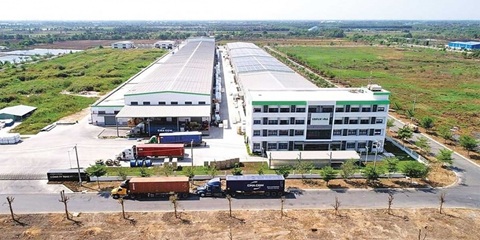
FOREIGN INVESTORS SEEKING A SYNCHRONISED MANUFACTURING ECOSYSTEM
Instead of focusing only on land costs and incentives as usual, foreign investors are seeking a synchronised manufacturing ecosystem, from stable power supply and logistics to shared infrastructure and the convenience of completing residence procedures for experts to serve their long-term investment in the country.
INFRASTRUCTURE / CONSTRUCTION / LOGISTIC / PORT
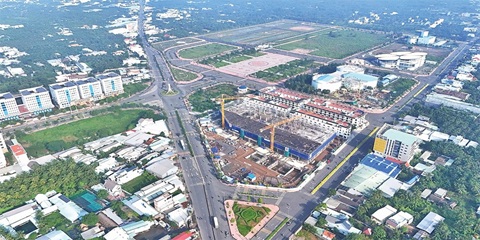
DONG THAP PROVINCE STEPS UP INDUSTRIAL EXPANSION AND INFRASTRUCTURE CONNECTIVITY
Accelerating public investment, strengthening inter-regional connectivity, and expanding industrial land are helping Dong Thap efficiently bolster competitiveness and drive economic growth. Following the 2025 merger of the former Dong Thap and Tien Giang provinces, the expanded Dong Thap province in the Mekong Delta faces mounting pressure to accelerate infrastructure development and strengthen connectivity among local economic zones, urban areas, industrial parks (IPs), and production centres.
PROPERTY / INDUSTRIAL ZONE
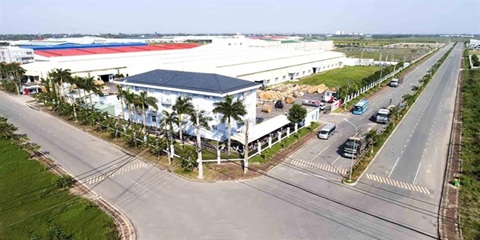
HCM CITY ATTRACTS US$5.7 BILLION INTO EXPORT PROCESSING AND INDUSTRIAL ZONES
HCM City attracted US$5.7 billion in domestic and foreign investment into its export processing and industrial zones during the first nine months of 2026. The figure exceeded the city's full-year target by 31 per cent, highlighting strong momentum in high-quality industrial investment under Resolution No.10-NQ/TW. Total investment reached 131 per cent of the 2026 target of $4.25 billion and represented a 29 per cent increase compared with the same period in 2025, according to the city's Export Processing and Industrial Zones Authority (HEPZA).

BANKING / FINANCE / INSURANCE / TAX
REMITTANCES TO HCM CITY RISE NEARLY 40% IN Q3
Remittances to HCM City reached more than US$2.83 billion in the third quarter of this year, up 39.5 per cent from the previous quarter and 3.6 per cent year-on-year. This was the first quarter showing positive annual growth this year, helping narrow the decline in remittance inflows over the first nine months. According to the State Bank of Vietnam (SBV)’s Regional Branch 2, remittances transferred to HCM City through credit institutions and economic organisations totalled $2.835 billion in Q3, an increase of more than $802 million from the previous quarter.
VIETNAM ECONOMY INVESTMENT
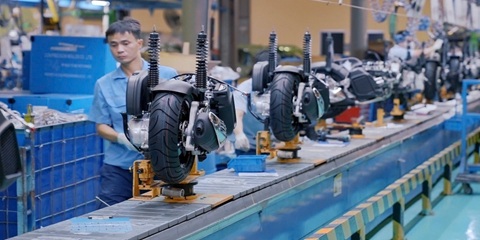
LOCALITIES REPORT BREAKTHROUGH RESULTS IN FDI IN FIRST NINE MONTHS
In Ho Chi Minh City, total registered capital reached $17.2 billion in the first nine months, up 4.2 times from the same period last year. The figure included more than $9.35 billion in newly registered capital and over $4.9 billion in additional capital for existing projects. Foreign investors also registered more than $2.9 billion through capital contributions and share purchases.

TECHNOLOGY
TECH SECTOR GROWTH OPENS UP OPPORTUNITIES FOR VIỆT NAM TO GO GLOBAL
The growth of the electronics, semiconductor and high-tech sectors worldwide is opening up a variety of opportunities for Vietnamese enterprises to integrate more deeply into the global supply chain. However, to become suppliers for these corporations, domestic enterprises must meet rigorous standards regarding quality, technology, productivity and order fulfilment capabilities.
Events Sponsors






















